We ship to the United States, its territories and outlying islands. Returns are accepted within 30 days of receipt. Full warranty information can be found here.





✓ Plant with Confidence—Guaranteed Through 2027
 Get it between -
Open-pollinated varieties, perfect for seed saving.
Safe seeds, free of neonics and other treatments.
It's simple. If you have a problem, we make it right.

Sorghum bicolor
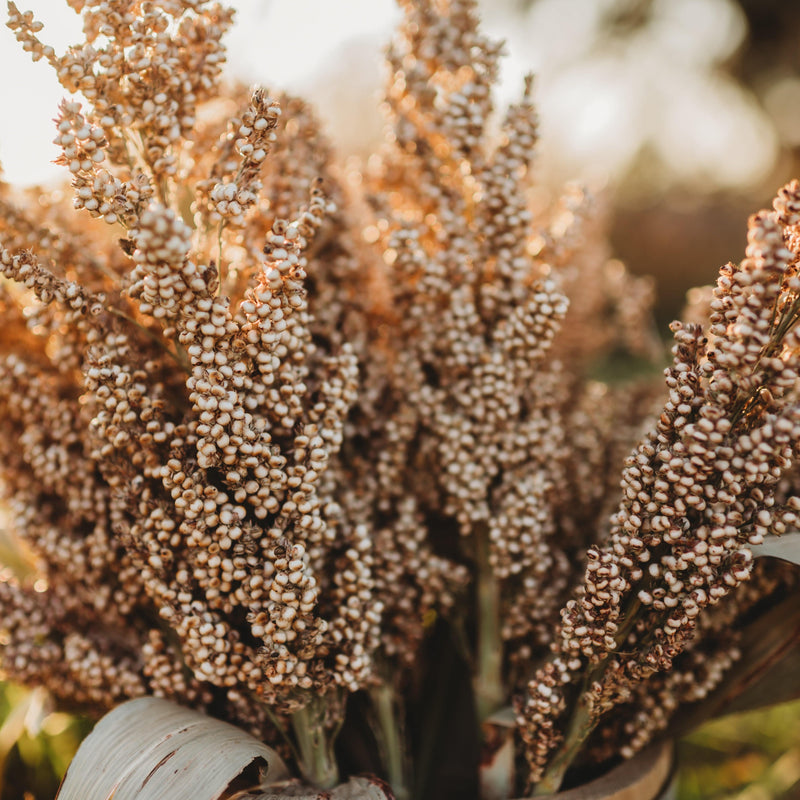
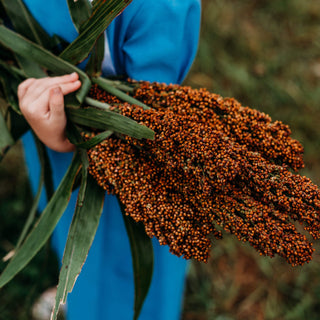
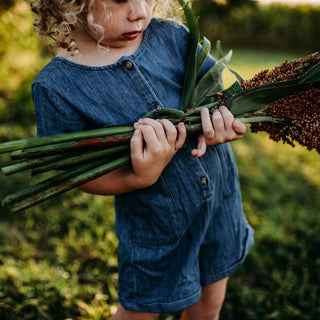
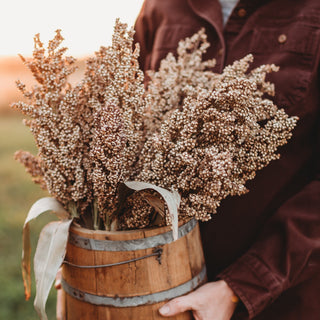
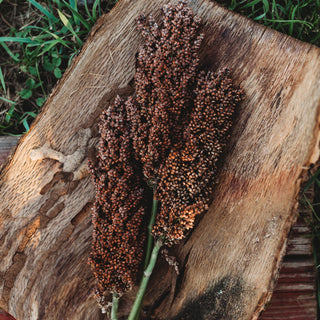
Multicolored Broomcorn is an heirloom sorghum grown for its exceptional visual impact and long, bristly seed heads. Formulated from a mixture of heirloom varieties, Multi-colored broom grows roughly 9–12 feet tall and produces large, highly branched panicles that grow up to 2 feet in length. What sets this variety apart is its remarkable range of color. Individual heads mature in shades of red, orange, brown, black, and white, often blending together into soft, natural ombré tones that shift as the seed heads dry.
Unlike more uniform broomcorns, Multicolored Broom matures as a true mix, with no two panicles quite alike. The crop reaches maturity in approximately 105–120 days, with color intensify... More
Sorghum bicolor
Multicolored Broomcorn is an heirloom sorghum grown for its exceptional visual impact and long, bristly seed heads. Formulated from a mixture of heirloom varieties, Multi-colored broom grows roughly 9–12 feet tall and produces large, highly branched panicles that grow up to 2 feet in length. What sets this variety apart is its remarkable range of color. Individual heads mature in shades of red, orange, brown, black, and white, often blending together into soft, natural ombré tones that shift as the seed heads dry.
Unlike more uniform broomcorns, Multicolored Broom matures as a true mix, with no two panicles quite alike. The crop reaches maturity in approximately 105–120 days, with color intensifying late in the season as the heads harden and dry. In the field, the effect is striking—rows of tall plants topped with a painterly mix of hues that feel as much ornamental as practical.
While perfectly suitable for traditional broom-making, Multicolored Broom corn truly shines as a decorative material. An assortment of dried heads gathered into a simple stoneware crock looks like a carefully curated arrangement, the kind you might expect to find in a gallery or high-end shop. The natural color gradients also lend themselves beautifully to wreaths and other dried displays. Matures approximately 105-120 days after sowing. Each packet contains a minimum of 100 Seeds
Sorghum bicolor
Multicolored Broomcorn is an heirloom sorghum grown for its exceptional visual impact and long, bristly seed heads. Formulated from a mixture of heirloom varieties, Multi-colored broom grows roughly 9–12 feet tall and produces large, highly branched panicles that grow up to 2 feet in length. What sets this variety apart is its remarkable range of color. Individual heads mature in shades of red, orange, brown, black, and white, often blending together into so... read more
Sorghum bicolor
Multicolored Broomcorn is an heirloom sorghum grown for its exceptional visual impact and long, bristly seed heads. Formulated from a mixture of heirloom varieties, Multi-colored broom grows roughly 9–12 feet tall and produces large, highly branched panicles that grow up to 2 feet in length. What sets this variety apart is its remarkable range of color. Individual heads mature in shades of red, orange, brown, black, and white, often blending together into soft, natural ombré tones that shift as the seed heads dry.
Unlike more uniform broomcorns, Multicolored Broom matures as a true mix, with no two panicles quite alike. The crop reaches maturity in approximately 105–120 days, with color intensifying late in the season as the heads harden and dry. In the field, the effect is striking—rows of tall plants topped with a painterly mix of hues that feel as much ornamental as practical.
While perfectly suitable for traditional broom-making, Multicolored Broom corn truly shines as a decorative material. An assortment of dried heads gathered into a simple stoneware crock looks like a carefully curated arrangement, the kind you might expect to find in a gallery or high-end shop. The natural color gradients also lend themselves beautifully to wreaths and other dried displays. Matures approximately 105-120 days after sowing. Each packet contains a minimum of 100 Seeds